




Getting Winter Heating Wrong Is More Common Than You Think. Cape Town winters are not the most extreme in the country. But the damp cold that settles across the Peninsula from June through August catches a lot of homeowners off guard every year. The response is usually the same. People pull out whatever they have, plug it in, and hope for the best. The result is rooms that never quite get warm enough, electricity bills that spike sharply, and a general sense that heating a home here is just expensive and difficult.
The truth is that most winter heating problems in Cape Town homes come down to a small set of avoidable mistakes. Getting these right does not require expensive upgrades across the whole house. It requires understanding what is actually going wrong and making smarter decisions about how you heat the spaces you use most.
Here are the five mistakes Cape Climate sees most often, and what to do instead.
Mistake 1: Using the Wrong Type of Heater for the Space
The most common heating mistake in Cape Town homes is reaching for whatever is available rather than choosing the right solution for the specific space. Portable fan heaters, oil heaters, gas heaters, and bar heaters all have different characteristics, and none of them are well suited to heating a room effectively over a full winter season.
Portable heaters heat the air immediately around them. They create a warm zone near the unit and leave the rest of the room cold. The person sitting closest to the heater is warm. Everyone else adjusts their position or adds another layer. This is not comfortable, and it is not efficient. You end up running the heater for longer because the room as a whole never reaches a comfortable temperature.
A reverse cycle inverter air conditioner addresses this problem directly. The indoor unit is mounted high on the wall and distributes conditioned air across the full width of the room from an elevated position. Systems like the Samsung AR40, the Daikin Sensira, and the Alliance Emerald are all designed to maintain a consistent temperature throughout the space, not just near the unit. The result is a room that feels genuinely warm rather than warm in patches.
The right heater for most Cape Town living areas, bedrooms, and home offices is a correctly sized reverse cycle inverter split system. Everything else is a workaround.
Mistake 2: Choosing a Unit That Is Too Small for the Room
Homeowners who do invest in a split aircon sometimes make the mistake of choosing a unit that is underpowered for the space. The most common reason is cost. A smaller unit costs less upfront, and the saving feels meaningful at the time of purchase. The problem reveals itself quickly once winter arrives. An undersized unit runs continuously trying to reach the target temperature but never quite gets there. The room stays cool, the system works at full load without relief, and the electricity consumption is high because the unit never reaches a point where it can reduce its output. You pay more to get less warmth.
Correct sizing is straightforward when it is done properly. Room area, ceiling height, insulation, glazing, and sun exposure all affect how much capacity the unit needs. A room of 25 square metres with north facing windows and minimal ceiling insulation requires more capacity than a well insulated room of the same size. Cape Climate assesses all of these factors before recommending a unit, which is why a site visit before purchase matters more than most homeowners realise.
The Daikin Sensira, Samsung AR40, and Alliance Emerald ranges all come in multiple capacities precisely because rooms vary. Getting the capacity right is not a minor detail. It is the single most important factor in whether the system performs as expected.

Mistake 3: Setting the Temperature Too High and Leaving It There
Many people assume that setting the thermostat to a high temperature will heat the room faster. It does not work that way. A reverse cycle aircon delivers heat at a rate determined by the outdoor temperature and the refrigerant cycle, not by how high you set the target temperature. Setting the unit to 30 degrees does not produce faster heating than setting it to 22 degrees. It simply means the system runs at full output for longer before it can begin to moderate itself.
The more energy efficient approach is to set the unit to a comfortable target temperature, typically between 20 and 22 degrees for most Cape Town homes in winter, and allow the system to reach and maintain that level. Inverter systems like the Samsung AR40 and Daikin Sensira are designed to run most efficiently in this maintenance phase, once the room is at the target temperature. This is where the electricity saving comes from. Driving the thermostat unnecessarily high keeps the system in a high output state longer than necessary and pushes up consumption.
The same principle applies to leaving the system set at a fixed temperature all day without adjustment. Using a timer or a schedule to have the unit reach temperature before the household needs the room, rather than running it continuously, reduces daily consumption without any reduction in comfort.
Mistake 4: Ignoring Heat Loss from Doors, Windows, and Gaps
A heating system can only do so much if the room it is working in leaks warm air constantly. Cape Town homes, particularly those built before the 1980s, were not designed with airtightness in mind. Sash windows with worn seals, gaps under doors, uninsulated ceilings, and single glazed windows all allow warm air to escape and cold air to enter. The heating system works harder and runs longer to compensate, which raises electricity consumption and reduces comfort.
This is not a reason to avoid installing a split aircon. A well specified reverse cycle system accounts for the typical heat loss of an older Cape Town home through correct BTU sizing. But homeowners who address some of the obvious heat loss points alongside their heating upgrade see better results from their system and lower running costs.
Simple measures make a meaningful difference. A draught excluder under the main door, heavy curtains drawn at night to reduce heat loss through glass, and ceiling insulation where none currently exists all reduce the load on the heating system. These are low cost interventions that pay back quickly through reduced electricity consumption over a Cape Town winter. Read more about our Heating Solutions.
A Cape Climate site assessment considers the heat loss characteristics of your space when recommending the right unit and capacity. If your home has obvious heat loss factors, the team accounts for them in the specification.
Mistake 5: Not Servicing the System Before Winter
This mistake applies to homeowners who already have a reverse cycle aircon but have not had it serviced in more than a year. A split aircon that has not been serviced runs less efficiently than one that is properly maintained. The consequences become most noticeable during winter, when the system is working harder to produce heat against cold outdoor temperatures.
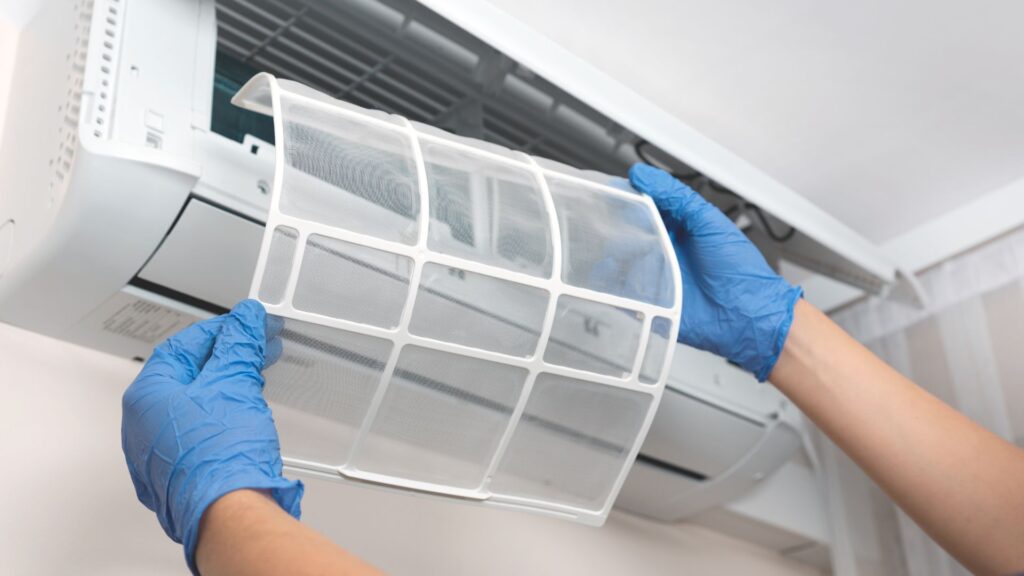
Over time, the filter in the indoor unit accumulates dust and reduces airflow. Reduced airflow means the system has to work harder to move the same volume of conditioned air through the room. The outdoor coil can also accumulate dirt and debris, which reduces the efficiency of the heat exchange process. Both of these factors push up electricity consumption without any corresponding improvement in the warmth delivered to the room.
A professional service before winter clears the filter, cleans the indoor and outdoor coils, checks refrigerant levels, inspects electrical connections, and confirms that the drain is clear. A system that has been properly serviced performs closer to its rated efficiency, which is exactly what you want during the months when it is working hardest. Cape Climate recommends an annual service for all installed systems, with the ideal timing being autumn before the cold arrives.
Frequently Asked Questions
How do I know if my current aircon is the right size for my room? If your aircon runs continuously during cold weather without reaching your set temperature, it is likely undersized for the space. Cape Climate can assess your room and confirm whether the current unit is correctly specified for the conditions.
What temperature should I set my aircon to in winter? Between 20 and 22 degrees is comfortable and efficient for most Cape Town homes. Setting the temperature higher than this does not heat the room faster and increases electricity consumption without improving comfort.
Does ceiling insulation really make a difference alongside an aircon? Yes. Ceiling insulation reduces heat loss through the roof space, which is one of the primary ways warm air escapes from Cape Town homes in winter. It reduces the load on the heating system and improves the consistency of the indoor temperature.
How often should I clean the filter in my aircon? Every two to four weeks during regular use. A dirty filter restricts airflow and forces the system to work harder, which increases electricity consumption. Cleaning the filter is straightforward and takes only a few minutes.
Is the Alliance Emerald, Daikin Sensira, or Samsung AR40 better for heating? All three are capable reverse cycle inverter systems that heat effectively in Cape Town winter conditions. The right choice depends on your room size, budget, and specific requirements. Cape Climate recommends the most suitable option after assessing your space.
When is the best time to book an aircon installation before winter? As early as possible. Demand for installations increases significantly once cold fronts begin arriving, typically from late May onward. Booking in April or early May gives you the best chance of having a system in place before the coldest months.
Stop Making Winter Harder Than It Needs to Be
Cold Cape Town winters are unavoidable. An expensive, uncomfortable, and inefficient approach to heating your home is not. The five mistakes covered in this post are all fixable, and most of them do not require significant expense. The most impactful change most homeowners can make is moving from portable heating to a correctly sized reverse cycle inverter system that heats the whole room, runs efficiently, and works safely through the night.
Cape Climate supplies and installs the Samsung AR40, Daikin Sensira, and Alliance Emerald ranges across Cape Town and the surrounding areas. Whether you are installing for the first time or replacing an underperforming system, the team assesses your space, recommends the right solution, and manages the full installation. Contact Cape Climate to arrange a site assessment and get your home ready for winter properly.
Cape Climate is a Cape Town based air conditioning and solar installation company. We supply and install Samsung, Daikin, and LG systems for residential and commercial clients across the Cape Peninsula.
