




Whether you’re replacing an old air conditioner or installing one for the first time, you’ll quickly discover that most modern systems are described as either inverter or non-inverter. While the difference may sound technical, understanding how these two technologies work can have a significant impact on your home’s comfort, your monthly electricity bill and the long-term value of your investment. Many homeowners focus on the purchase price alone, only to realise later that the cheapest option isn’t always the most economical over the lifespan of the unit. Choosing the right air conditioner means looking beyond the price tag and understanding how the system will perform throughout Cape Town’s changing seasons.
Cape Town homeowners experience a unique climate. Winter mornings often begin with cold temperatures and rain before the sun appears during the afternoon, while summer can bring long periods of intense heat. This means your air conditioner needs to do far more than simply cool a room. It needs to provide reliable heating during winter, efficient cooling during summer and maintain a comfortable indoor temperature without constantly wasting electricity. At Cape Climate, one of the questions we hear most often is whether an inverter air conditioner is worth the additional investment. The answer depends on your needs, but once you understand how both technologies work, the decision becomes much easier.
What Is an Inverter Air Conditioner?
An inverter air conditioner uses advanced compressor technology that automatically adjusts its operating speed according to the temperature inside your home. Instead of repeatedly switching on and off, the compressor constantly monitors the room temperature and only uses the amount of power required to maintain your preferred comfort level. This intelligent adjustment allows the unit to operate more efficiently while delivering consistent heating or cooling throughout the day.
A simple way to understand inverter technology is to compare it to driving a vehicle on the motorway. Once you’ve reached the speed limit, you don’t continually accelerate to full speed and then brake to a complete stop every few seconds. Instead, you maintain a steady speed and make small adjustments when necessary. An inverter air conditioner works in much the same way. Once the room reaches the desired temperature, the compressor slows down rather than shutting off completely. This continuous but controlled operation creates a more stable indoor climate while using considerably less electricity.
For homeowners in Cape Town, this technology makes a noticeable difference during winter. As outside temperatures fluctuate throughout the day, the inverter compressor quietly adjusts itself to keep your home comfortable without the noticeable hot and cold cycles associated with older systems. The result is a home that feels consistently warm during winter evenings and comfortably cool throughout summer without dramatic changes in temperature.
What Is a Non-Inverter Air Conditioner?
A non-inverter air conditioner operates using a fixed-speed compressor. Unlike an inverter system, the compressor can only function in one mode: full power. When the room temperature moves away from your selected setting, the compressor starts at maximum capacity until the desired temperature has been reached. Once that happens, the compressor switches off completely. As the room begins warming up or cooling down again, the compressor restarts at full power and repeats the entire process.
Although this technology has been used successfully for many years, it isn’t nearly as efficient as modern inverter systems. Every time the compressor restarts, it requires a large amount of electricity. These repeated start-stop cycles not only consume more power but also create greater temperature fluctuations inside your home. You may notice the room becoming slightly too warm before cooling again or slightly too cold before the heating restarts. While these changes may seem minor, they affect both comfort and energy consumption over time.
Non-inverter units generally cost less to purchase initially, making them attractive to homeowners working with a tight budget. However, when considering long-term electricity costs, maintenance and overall performance, the lower purchase price often becomes less significant. For households using their air conditioner daily throughout winter and summer, running costs become far more important than the initial saving.
Inverter vs Non-Inverter: A Side-by-Side Comparison
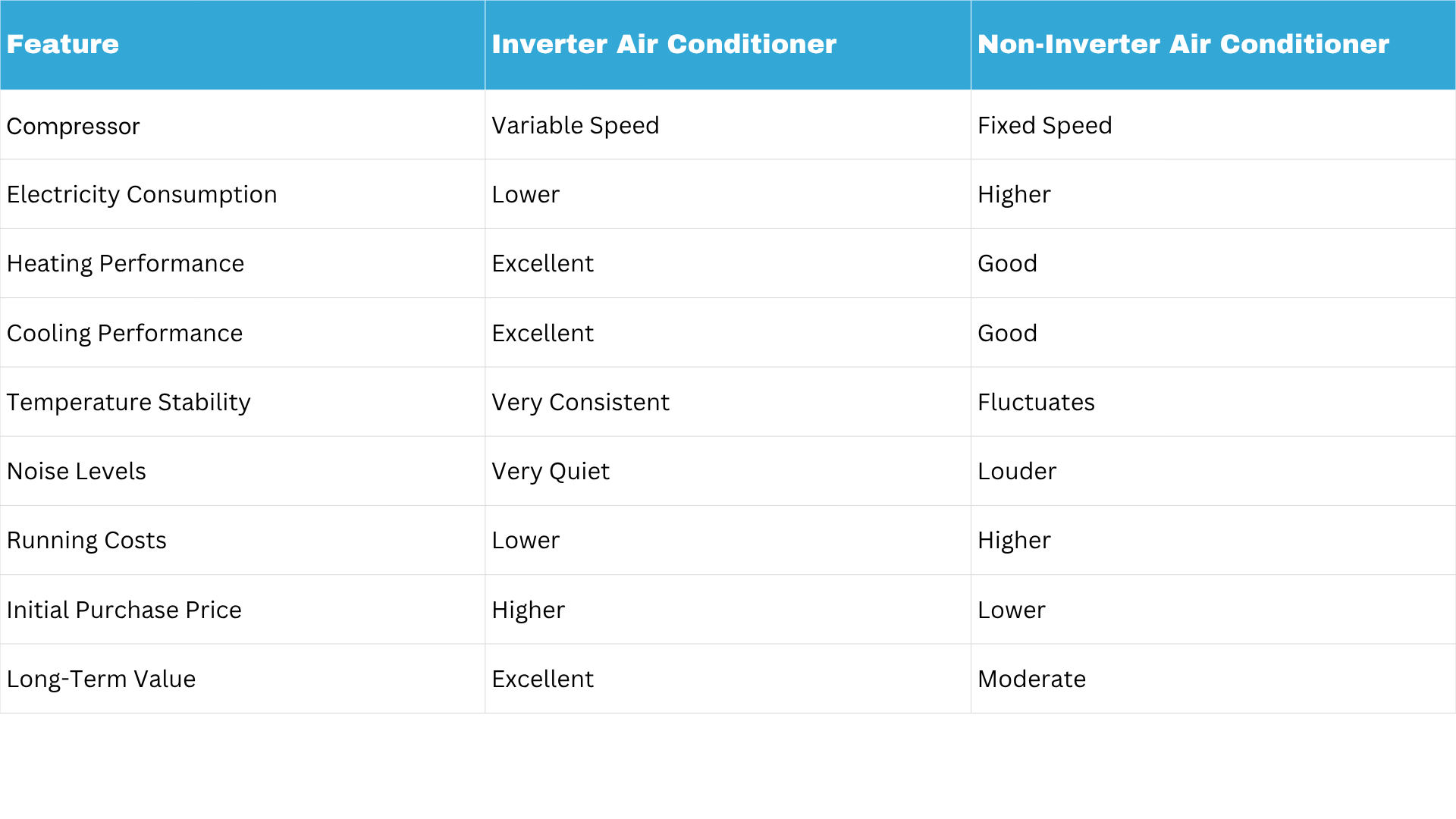
While both systems are capable of heating and cooling your home, the way they achieve those results differs considerably. Over several years of ownership, the improved efficiency of an inverter air conditioner often outweighs its higher purchase price.
Which System Uses Less Electricity?
With electricity prices continuing to rise in South Africa, energy efficiency has become one of the biggest deciding factors when purchasing an air conditioner. This is where inverter technology truly stands apart. Because the compressor adjusts its speed rather than constantly restarting, it avoids the high power surge that occurs every time a non-inverter compressor switches back on. Instead, the inverter compressor quietly maintains the desired temperature using only the energy required at that moment.
For homeowners who use their air conditioner every day during winter, these savings can become substantial over time. Whether you’re working from home, spending evenings with your family or simply wanting a warm bedroom before going to sleep, an inverter system provides continuous comfort without unnecessarily increasing your electricity consumption. Instead of thinking only about today’s purchase price, it’s worth considering what you’ll spend operating the unit over the next ten years.
Which System Is Better During Cape Town Winters?
Cape Town winters are unpredictable. One day may bring heavy rain and temperatures in the low teens, while the next afternoon is sunny enough to open the windows. These changing conditions require a heating solution that can adapt quickly without constantly switching between full power and complete shutdown.
An inverter air conditioner is perfectly suited to these changing conditions because it continuously adjusts its output as outdoor temperatures change. Rather than allowing your home to become too cold before restarting the heating cycle, the compressor gently increases or decreases its speed to maintain a comfortable indoor environment. This creates a much more pleasant living space, particularly in bedrooms, lounges and home offices where people spend extended periods of time.
Many homeowners are surprised to discover that a quality inverter air conditioner can often provide more economical heating than portable electric heaters. While portable heaters simply convert electricity into heat, inverter air conditioners use heat pump technology, making them far more efficient when heating an enclosed space.
Is an Inverter Air Conditioner Quieter?
Noise levels are often overlooked until the air conditioner has already been installed. Traditional non-inverter systems tend to produce noticeable noise each time the compressor starts and stops, particularly the outdoor unit. These repeated cycles can become distracting, especially during the evening or when working from home.
Because inverter compressors rarely operate at full capacity for extended periods, they run significantly quieter. Once the room reaches the desired temperature, the compressor slows down, reducing both vibration and operating noise. This quieter performance makes inverter systems ideal for bedrooms, nurseries and open-plan living areas where comfort includes more than simply maintaining the right temperature.
Is Paying More Upfront Really Worth It?
This is perhaps the biggest question homeowners ask before making a decision. While non-inverter air conditioners generally have a lower purchase price, it’s important to view the purchase as a long-term investment rather than a once-off expense. Running costs, electricity savings, comfort, reliability and lifespan all contribute to the true cost of ownership.
Most homeowners who choose an inverter system quickly notice the difference. Their home reaches the desired temperature faster, stays comfortable for longer and operates more quietly throughout the day. Over several years, the reduced electricity consumption helps offset the higher purchase price, making inverter systems the more economical option for households that regularly use their air conditioner throughout the year.
Which Air Conditioner Does Cape Climate Recommend?
At Cape Climate, there isn’t a single air conditioner that’s right for every customer. Choosing the ideal system depends on the size of the room, ceiling height, insulation, the amount of afternoon sun entering the property and how the space will be used. Rather than recommending the most expensive option, our team focuses on finding the system that delivers the best balance between performance, efficiency and budget.
That’s why we install trusted inverter brands including the Daikin Sensira, Samsung AR40, Alliance Emerald and Midea Breezeless. Each of these models offers excellent energy efficiency, reliable heating during winter and dependable cooling throughout Cape Town’s warmer months. By carrying a range of leading brands, we can recommend the solution that best suits your home rather than forcing every customer into the same product.
The Verdict: Which One Should You Choose?
When comparing inverter and non-inverter air conditioners, the differences become clear. While non-inverter systems may appear attractive because of their lower purchase price, inverter technology offers significant advantages in almost every other category. Better energy efficiency, quieter operation, more consistent temperatures and lower long-term running costs make inverter air conditioners the preferred choice for most modern homes.
For Cape Town homeowners looking for reliable heating during winter and efficient cooling throughout summer, investing in an inverter air conditioner is often the smarter long-term decision. More importantly, choosing the correct size and model ensures you’ll enjoy those benefits for many years to come. At Cape Climate, every installation begins with understanding your home and recommending a solution that matches your lifestyle, budget and comfort requirements.
If you’re considering upgrading your existing system or installing air conditioning for the first time, speak to the Cape Climate team today.
We’ll help you compare your options, recommend the right inverter air conditioner for your home and provide a professional installation that delivers reliable comfort through every season.
