



How Often Should You Service Your Air Conditioner in Cape Town?
The standard answer you will find online is once a year. That answer is not wrong, but it is incomplete, and for many Cape Town properties it will leave your system underprepared for the conditions it actually operates in.
Cape Town’s combination of coastal salt air, wind-driven dust, year-round temperature swings, and the way most households use their systems for both heating and cooling means servicing frequency needs to be calibrated to your specific situation. This guide gives you a precise framework for making that call, based on your location, usage pattern, and system type.
Why Cape Town Is Not a Standard Servicing Environment
Most servicing guidelines are written for general conditions. Cape Town does not offer general conditions.
The ocean air across the Atlantic Seaboard, Bloubergstrand, Muizenberg, Hout Bay, and similar coastal suburbs carries salt particles that accelerate corrosion on outdoor condenser units. Copper coils, aluminium fins, and electrical contacts are all vulnerable. The air around the ocean contains corrosive minerals which damage copper coils over time, and for units situated close to the ocean, two to four services a year are recommended due to corrosion risk.
That is a significant departure from the once-a-year baseline. A unit installed in Durbanville faces a completely different operating environment than one installed in Camps Bay, even if both are the same model, the same age, and used for the same number of hours per day. Beyond the coast, Cape Town’s inland suburbs deal with fine dust, pollen from fynbos, and the kind of temperature range that pushes systems to work hard in both summer and winter. An inverter system running for heating in June and cooling in January is accumulating hours in both directions. That annual service interval shortens as usage increases. Coastal units generally need servicing one to two times yearly compared to once inland, and coastal units face faster wear from salt and humidity. Those are averages. Your specific location and usage will determine where you sit within that range.
The Servicing Frequency Framework
Once a year is the minimum for any operational system. If your unit runs seasonally, either for summer cooling or winter heating but not both, and your property sits more than two kilometres from the coast with no industrial or construction activity nearby, annual servicing is adequate. Book it in spring before the summer peak, or in autumn before the heating season begins.
Twice a year applies if your system runs year-round for both heating and cooling, which describes most Cape Town households with an inverter split system. The most ideal time to service your aircon is just before either the heating season or cooling season, to prevent breakdown during a critical time and avoid delays in service levels. Servicing in September and again in March aligns with Cape Town’s seasonal pattern and keeps the system clean and efficient entering each peak period.
Three to four times a year applies to coastal properties within close proximity to the ocean, commercial systems running continuously, properties near construction sites or industrial areas, and households with pets or high occupancy generating additional dust load. Air conditioners and heat pumps should be serviced every four months within the commercial and industrial sectors. For coastal residential properties, two to three services per year is a defensible position depending on how exposed the outdoor unit is to direct sea air.
What Changes at the Coast
If your property is in Sea Point, Camps Bay, Bantry Bay, Bloubergstrand, Muizenberg, Fish Hoek, or Simon’s Town, the outdoor unit is your primary maintenance concern. Salt deposits on the condenser coil reduce heat transfer efficiency. Corroded fins restrict airflow. Oxidised electrical contacts introduce resistance and failure risk.
A standard annual service that cleans the filters and checks refrigerant levels is not sufficient for a coastal installation. Your service should specifically include inspection and cleaning of the outdoor condenser coil, anti-corrosion treatment of the fin array, and a check of all external electrical connections for oxidation.
Some suppliers offer anti-corrosion coating as a protective treatment applied during installation or servicing. For properties within one kilometre of the ocean, this is worth investing in. It will not eliminate the effects of salt air, but it meaningfully extends the service intervals between corrosion-related interventions and protects the overall lifespan of the outdoor unit.

Signs Your System Needs a Service Regardless of Schedule
Servicing schedules are preventative frameworks. They do not override what your system is telling you. If any of the following appear, book a service immediately rather than waiting for your scheduled appointment. A musty or stale smell when the unit starts up indicates mould or bacterial growth inside the indoor unit, typically on the evaporator coil or drain pan. This is a health concern, not just a performance issue. Dirty, mould-contaminated filters can significantly increase electricity consumption and circulate allergens into your living space.
Cape Climate Airconditioning Installers
Reduced airflow from the indoor unit, where the output feels weaker than normal, points to a blocked filter, a partially obstructed coil, or a fan issue. A blocked filter alone can increase electricity consumption substantially and forces the compressor to work harder to achieve the set temperature. Unusual sounds including rattling, grinding, or intermittent clicking are mechanical signals. Rattling often indicates a loose component in the indoor or outdoor unit. Grinding suggests bearing wear in the fan motor. Neither resolves on its own.
Water leaking from the indoor unit beyond normal condensation is a drainage issue. Visible leaks or excessive moisture are not normal. Water leaks can lead to damage to walls, ceilings, flooring, and surrounding finishes if left unresolved. A blocked condensate drain is the most common cause and is addressed during a standard service.
An unexplained increase in your electricity bill without a change in usage pattern is a strong efficiency signal. A system working harder than it should to reach the set temperature is consuming more power. The cause could be a refrigerant issue, a dirty coil, or a failing compressor.
What a Professional Service Covers
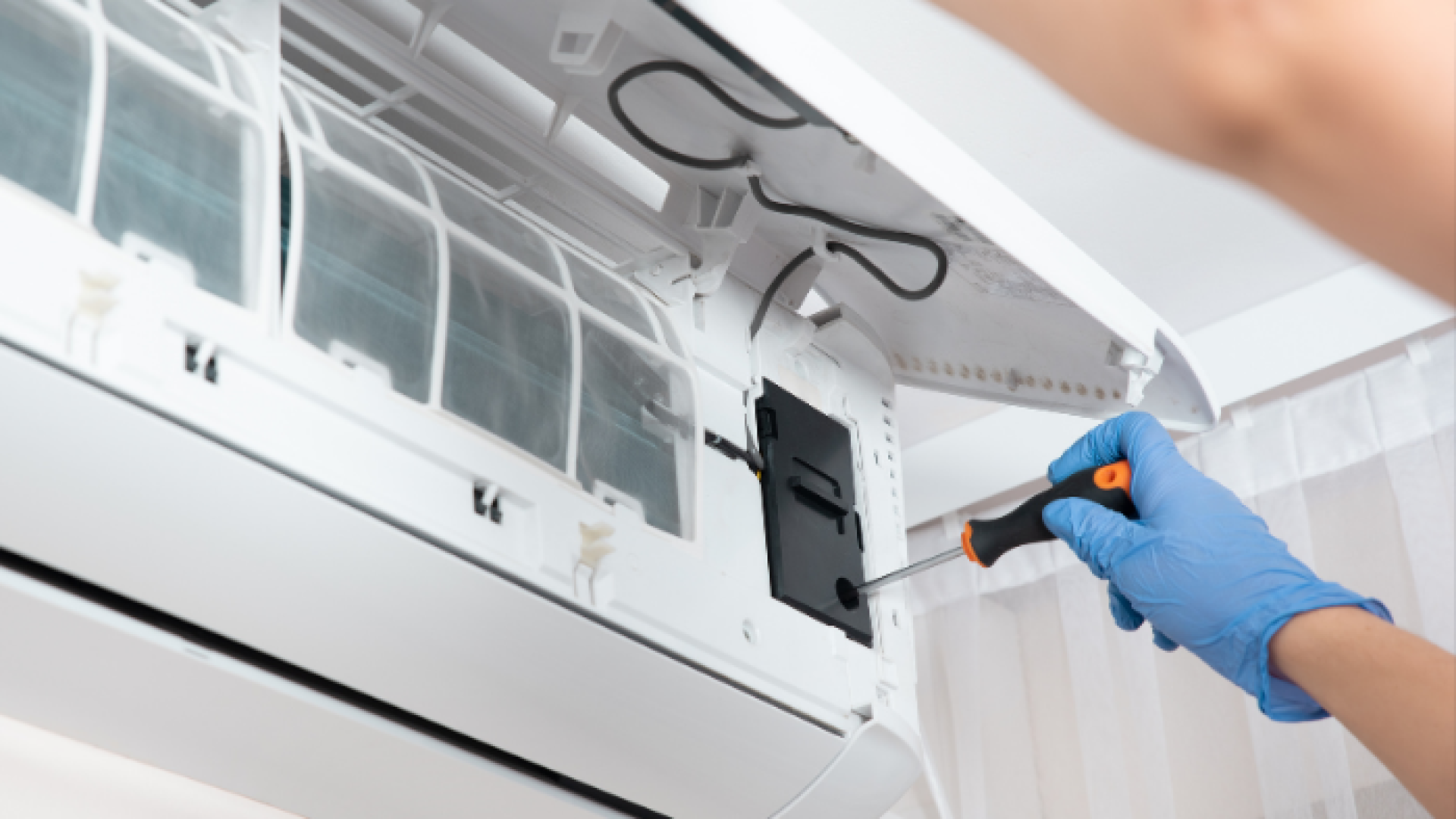
A thorough service from Cape Climate covers the following on every visit. Filter cleaning or replacement removes accumulated dust, pollen, and airborne particles from the indoor unit. This is the single highest-impact maintenance action for both air quality and efficiency.
Evaporator and condenser coil cleaning removes the buildup that reduces heat transfer on both the indoor and outdoor unit. Chemical cleaning is more effective than water alone for biofilm and mould. Condensate drain clearing prevents the blockages that cause water leaks from the indoor unit. Refrigerant level check confirms the system is operating at the correct charge. Low refrigerant reduces cooling capacity and can damage the compressor if left uncorrected.
Electrical component inspection covers contactors, capacitors, and wiring connections for signs of wear, heat damage, or corrosion. Airflow and temperature testing verifies the system is delivering the expected output at the set temperature. For coastal properties, a corrosion inspection of the outdoor unit fins and coil is included, with anti-corrosion treatment applied where needed. A full service typically takes between one and two hours for a single split system. For multi-unit installations or systems that have not been serviced in some time, allow longer.
Servicing and Your Manufacturer Warranty
Most air conditioner manufacturers require evidence of regular professional servicing to honour warranty claims. If your system develops a fault and you cannot demonstrate that it has been maintained in line with the recommended schedule, the manufacturer is within their rights to decline the claim.
This is not a hypothetical risk. It is a standard warranty condition across Daikin, Samsung, Midea, LG, and every other major brand sold in South Africa. Keeping a record of your service visits, including the service report from each visit, protects your warranty position for the full term of the guarantee.
A simple yearly aircon service intervention will prevent 85% of all air conditioning problems. That figure reflects what professional technicians observe in the field. The majority of breakdowns and repairs they attend are on systems that have not been serviced on schedule. Prevention is consistently cheaper than repair, and in Cape Town’s coastal environment the gap between the two is wider than it is elsewhere.
Book Your Cape Climate Service
Cape Climate services residential and commercial air conditioning systems across Cape Town, including the Atlantic Seaboard, Southern Suburbs, Northern Suburbs, and the Peninsula. Our technicians carry the tools and parts to complete most service work in a single visit.
Contact Cape Climate to book your service or to discuss the right maintenance schedule for your specific system and location.
About Cape Climate
Cape Climate isn’t just another installation company, we’re a family-run business with a legacy of trust, craftsmanship, and personal service. Proudly operating in Cape Town since 2011, we bring a hands-on approach, deep technical knowledge, and a genuine care for the people and homes we serve.
Founded by Mark Polson, Cape Climate was inspired by generations of experience, with guidance from his father, who established Climate Air back in 1971. Those family values continue to guide every project we take on: honesty, quality, and long-term relationships. We’ve built our business through word of mouth, not gimmicks, 80% of our new clients come from satisfied customer referrals. We pride ourselves on staying approachable, responsive, and transparent from the first contact to the final installation (and beyond). At Cape Climate, we’ll never recommend a solution you don’t need. We don’t disappear once the job is done. And we treat every home or business like our own.
