



Choosing an air conditioner for your home is not always as straightforward as comparing two prices and choosing the cheaper option. Once you start looking at different brands, features, energy efficiency, heating and cooling performance and installation requirements, it becomes clear that the right aircon depends on much more than the number on the price tag. This is particularly true in Cape Town, where an air conditioner can be used for both winter heating and summer cooling, making it an important part of the home’s comfort throughout the year. For homeowners comparing their options, the Daikin Sensira and Alliance Emerald are two 9,000 BTU air conditioners worth putting side by side because they offer similar core functionality while coming from two very different brands.
Both the Daikin Sensira and Alliance Emerald use inverter technology and are designed to provide both heating and cooling, which makes them suitable for homeowners looking for a year round climate control solution rather than an appliance that is only useful during summer. The two brands also use R32 refrigerant in these ranges, while offering different combinations of features, efficiency ratings, noise levels and pricing. Daikin is an established international air conditioning brand with a strong reputation in heating and cooling technology, while Alliance has established itself as a value focused brand within the South African market. The interesting question for a homeowner is therefore not simply which brand is better, but whether the additional investment in the Daikin Sensira offers enough value for their particular home and whether the Alliance Emerald provides everything they actually need.
Daikin Sensira vs Alliance Emerald: What Are You Actually Comparing?
The first step in comparing these two air conditioners is to understand what they have in common. Both are designed for residential applications and provide heating and cooling from the same system, while inverter technology allows the compressor to adjust its output according to the demand rather than operating in a simple on and off cycle. This makes inverter air conditioning particularly useful in a home because the system can work towards maintaining a more consistent indoor temperature instead of repeatedly starting and stopping at full capacity.
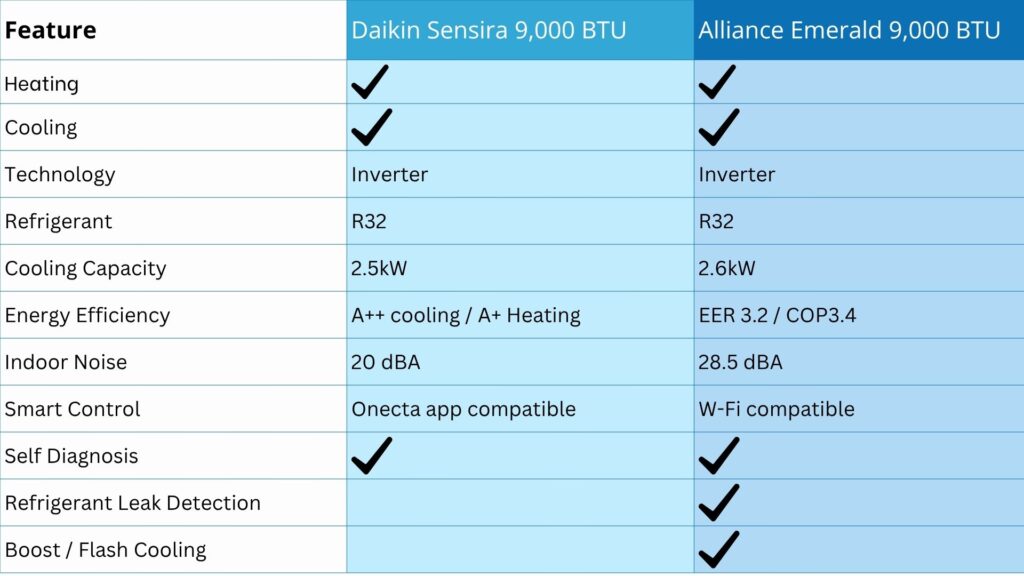
The Alliance Emerald 9,000 BTU model has a published cooling capacity of 2.6 kW and a heating capacity of 2.6 kW, with an EER of 3.2 and COP of 3.4. Alliance also lists features including Wi Fi compatibility, self diagnosis, refrigerant leak detection, boost functionality and flash cooling. Daikin’s Sensira range is available in different capacities, with the applicable models offering heating and cooling, inverter technology, low energy consumption and optional Onecta app control. Daikin also highlights sound pressure levels down to 20 dBA on applicable Sensira models, which makes low noise operation one of the more notable features of the range.
Although these specifications are useful when comparing the two products, they should not be treated as the only deciding factors. A 9,000 BTU aircon may be suitable for one room and completely unsuitable for another depending on the room size, windows, insulation, ceiling height, amount of direct sunlight and how the space is used. This is why a professional aircon installation company should assess the property before recommending a particular capacity, rather than simply telling a homeowner to buy a 9,000 BTU unit because it happens to be the size they had in mind.
How Do the Daikin Sensira and Alliance Emerald Compare for Heating and Cooling?
For most homeowners, the most important question is whether the air conditioner can keep the room comfortable when the weather changes, and this is where both the Daikin Sensira and Alliance Emerald have an advantage over cooling only systems. Cape Town homes can experience cold winter mornings, damp evenings and surprisingly hot summer days, sometimes within a relatively short period. Having an air conditioner that provides both heating and cooling means the homeowner can use the same system throughout the year instead of relying on one appliance during summer and another heating solution during winter.
The Alliance Emerald 9,000 BTU model has a published heating and cooling capacity of 2.6 kW, making it a practical option for appropriately sized residential spaces. The Daikin Sensira is also designed as a heating and cooling solution, although the exact performance figures depend on the specific model and capacity selected. For this reason, homeowners should compare the exact model numbers on a quotation rather than assuming that every 9,000 BTU unit from a particular brand will have identical specifications.
In practical terms, both units can provide the year round comfort that homeowners increasingly expect from residential air conditioning. The more important consideration is whether the system has been correctly matched to the room. An undersized unit may have to work harder to reach the desired temperature, while an oversized unit may not operate in the way the homeowner expects. Room size is important, but so are factors such as the amount of glass, sunlight entering the room, insulation, ceiling height and the number of people regularly occupying the space.
Which Is More Energy Efficient, Daikin Sensira or Alliance Emerald?
Energy efficiency is one of the main reasons homeowners choose inverter air conditioning, particularly when they expect to use the system regularly during both winter and summer. An inverter compressor can vary its output according to the heating or cooling demand, allowing it to reduce its output once the desired temperature has been reached rather than continually operating at maximum capacity. This can provide a more efficient way of maintaining indoor comfort compared with older fixed speed systems.
Daikin places considerable emphasis on energy efficiency within the Sensira range and states that applicable models can achieve seasonal efficiency ratings of up to A++ in cooling. The manufacturer also highlights energy saving functions such as Econo mode and energy saving standby on applicable models, while the Onecta app can provide additional control over the system. These features make the Sensira particularly attractive to homeowners who are thinking about long term energy consumption rather than simply looking at the purchase price.
The Alliance Emerald also uses inverter technology and the 9,000 BTU specification provides published EER and COP figures that indicate its cooling and heating efficiency under standard test conditions. Alliance has positioned the Emerald as a value focused inverter solution that combines heating and cooling with a range of practical features. For a homeowner who wants the benefits of inverter technology without moving into a higher price bracket, the Emerald can therefore be a sensible option.
It is important to remember that the efficiency rating of an air conditioner does not translate directly into a guaranteed monthly electricity cost. Actual consumption depends on how frequently the unit is used, the temperature selected, the size and characteristics of the room, outdoor temperatures, insulation and whether the system has been installed and maintained correctly. A correctly sized and professionally installed air conditioner can therefore make a significant difference to the overall performance of the system regardless of which of these two brands the homeowner chooses.
Is the Daikin Sensira Quieter Than the Alliance Emerald?
Noise is an easy feature to overlook when buying an air conditioner because it is difficult to judge from a product photograph or price comparison. Once the unit is installed in a bedroom, study or living room, however, the sound it produces can become much more noticeable, particularly when the system is running at night or when the room is otherwise quiet.
The Daikin Sensira has a strong specification in this area, with Daikin stating that applicable models can operate at sound pressure levels as low as 20 dBA. This makes low noise operation one of the features that may appeal to homeowners who are particularly sensitive to sound or who want an air conditioner installed in a bedroom where the system may run while they sleep.
The Alliance Emerald is also designed for low noise operation, with the published 9,000 BTU specification giving an indoor sound pressure level of approximately 28.5 dBA on the low setting. While this is higher than the lowest published figure for applicable Sensira models, it is still a relatively quiet operating level for a residential air conditioner. The difference is therefore more important for someone who places a particularly high value on the quietest possible operation than for a homeowner who is primarily concerned with getting reliable heating and cooling at a competitive price.
What Features Do the Two Air Conditioners Offer?
Modern homeowners often expect more from an air conditioner than simply being able to turn it on and change the temperature. Smart controls, diagnostic functions and convenience features can all make a difference to the ownership experience, although the value of these features depends heavily on whether the homeowner is actually going to use them.
The Daikin Sensira can be paired with the Onecta app on applicable models, allowing homeowners to control and monitor their system from a smartphone or tablet. This can be particularly convenient when you want to adjust the temperature before arriving home or manage the system without having to locate the remote control. Daikin also includes functions designed to improve energy efficiency and comfort, depending on the specific Sensira model selected.
The Alliance Emerald takes a slightly different approach, offering Wi Fi compatibility alongside features such as self diagnosis and refrigerant leak detection. Alliance also highlights boost and flash cooling functions, which are designed to provide faster temperature changes when required. These features give the Emerald a strong specification for its price category and demonstrate that choosing a more competitively priced air conditioner does not necessarily mean giving up useful technology.
When comparing the two, the better feature set is ultimately the one that suits the homeowner. Someone who values the Daikin brand and wants app based control may prefer the Sensira, while another homeowner may find the Alliance Emerald’s combination of Wi Fi, diagnostics and rapid cooling features more attractive. There is little value in paying extra for features that you will never use, which is why the way the system will be used should form part of the buying decision.
Daikin Sensira vs Alliance Emerald: Which Offers Better Value?
Price is often where homeowners begin their aircon comparison, but it should really be where the conversation becomes more detailed rather than where it ends. The Alliance Emerald is positioned as a value for money product, while the Daikin Sensira generally carries a higher purchase price because of the brand and the features associated with the range. This creates a genuine choice for the homeowner rather than simply making one product obviously better than the other.
If the initial purchase price is one of your main considerations, the Alliance Emerald can be attractive because it provides inverter heating and cooling, Wi Fi compatibility and a range of practical features without moving into the higher price bracket associated with some established international brands. For homeowners who want a reliable residential system and are careful about the upfront cost, this can make the Emerald a strong contender.
The Daikin Sensira makes more sense for someone who is prepared to spend more upfront and places greater importance on the Daikin brand, low noise operation, energy efficiency and the overall ownership experience. The additional cost may be worthwhile for a homeowner who intends to use the system frequently and sees the air conditioner as a long term investment rather than simply a seasonal purchase.
The important point is that value does not necessarily mean choosing the cheapest option. A cheaper aircon that is poorly matched to the room or incorrectly installed may become a poor investment, while a more expensive unit that is correctly sized, professionally installed and maintained can provide years of useful service. The total value of an air conditioning system therefore needs to be considered over its expected lifespan rather than only on the day you receive the quotation.
Which Aircon Is Better for a Cape Town Home?
There is no universal winner between the Daikin Sensira and Alliance Emerald because the better choice depends on what the homeowner expects from the system. Both brands offer inverter heating and cooling, both are available in capacities suitable for residential applications and both can provide year round comfort when correctly selected and installed.
The Daikin Sensira is likely to appeal more to homeowners who are willing to invest more upfront for an established international air conditioning brand and who place particular importance on low noise operation, energy efficiency and smart control options. Its published specifications and features make it a strong choice for bedrooms, living spaces and other areas where quiet operation and long term comfort are important considerations.
The Alliance Emerald is likely to appeal to homeowners who want to keep the initial investment more competitive while still getting inverter heating and cooling, Wi Fi compatibility and a useful range of additional functions. Its 9,000 BTU model provides a practical solution for appropriately sized residential spaces and can be particularly appealing when value for money is a major part of the decision.
Rather than asking which brand is objectively better, homeowners should ask which system is better suited to their home, budget and lifestyle. A person who wants the quietest possible system for a bedroom may reach a different conclusion from someone who wants an affordable aircon for a home office or living room, and neither decision is necessarily wrong.
Why the Right Aircon Size Matters More Than the Brand
One of the biggest mistakes homeowners make when shopping for an air conditioner is focusing heavily on the brand while giving too little attention to the size and requirements of the room. A Daikin Sensira or Alliance Emerald can both perform well when correctly selected, but neither can compensate for an air conditioner that is not suitable for the space it has been installed in.
The required capacity can be affected by the size of the room, ceiling height, number and size of windows, direction of the room, amount of direct sunlight, insulation and the number of people who regularly use the space. A room with large north facing windows and significant afternoon sun can have very different cooling requirements from a shaded bedroom of the same floor area.
This is why Cape Climate recommends assessing the space before deciding which air conditioner should be installed. Looking at the room and understanding how it will be used allows the installer to recommend an appropriate capacity rather than simply selling the homeowner the model they initially requested.
The same principle applies when deciding between the Daikin Sensira and Alliance Emerald. If both are suitable for the room, the homeowner can then make the decision based on price, features, noise, brand preference and long term value. If one model is better suited to the space, however, that should carry more weight than the brand name printed on the front of the unit.
Why Professional Installation Matters
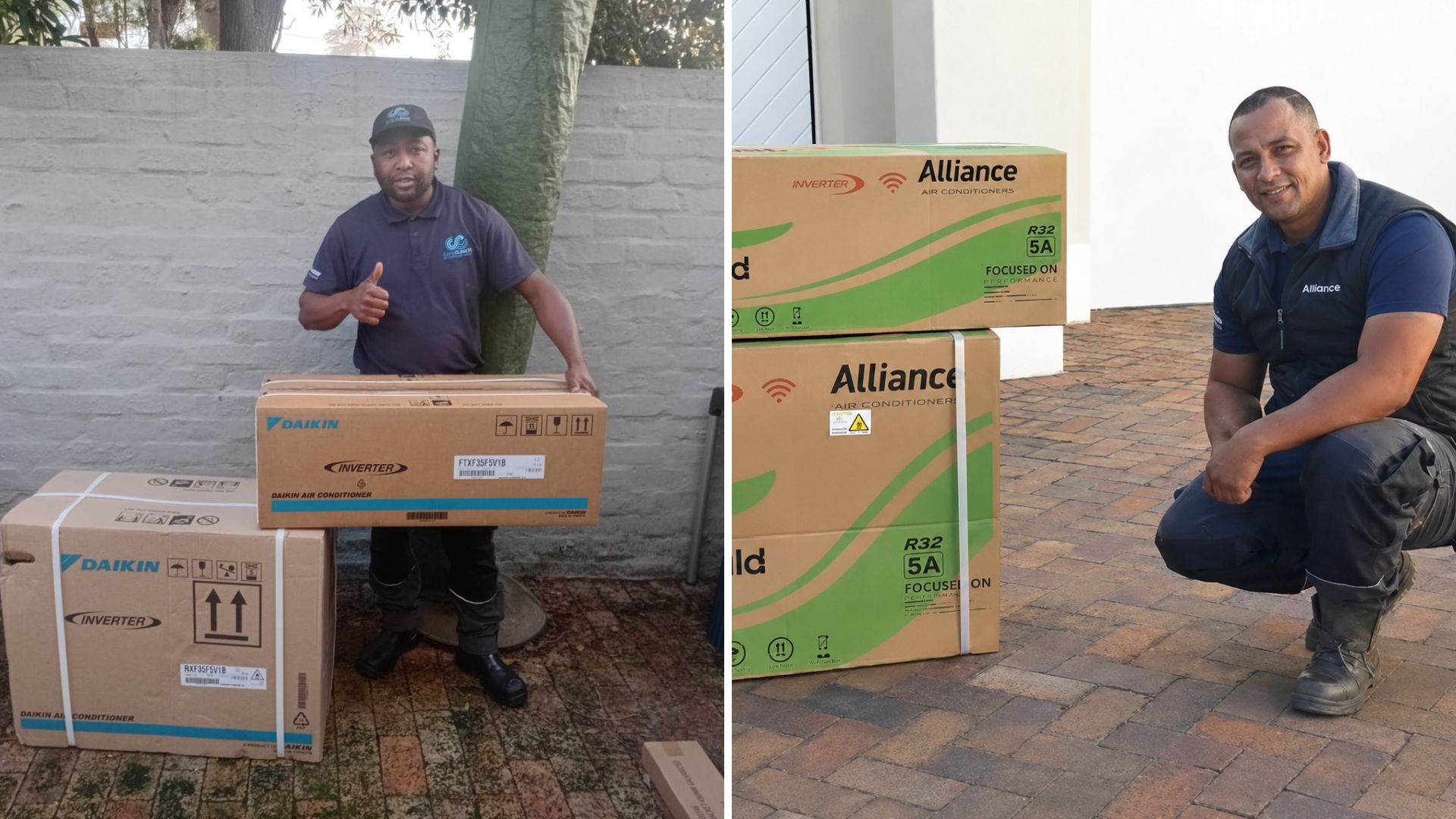
Comparing air conditioners online is useful, but the installation itself is one of the most important parts of the final result. The indoor unit needs to be positioned correctly for effective air distribution, while the outdoor unit requires suitable airflow and access for future servicing. Refrigerant pipework, drainage and electrical connections also need to be installed correctly so that the complete system can operate as intended.
This is particularly important in residential properties where the homeowner wants the installation to look neat as well as function properly. The position of the indoor unit can affect both comfort and the appearance of the room, while the outdoor unit needs to be located in a practical position without creating unnecessary problems for future maintenance.
A good aircon installer in Cape Town should therefore look at the complete installation rather than treating the job as simply mounting a unit on the wall. The equipment, positioning, pipework, electrical requirements and testing all form part of the finished system, and these details can have a direct effect on the homeowner’s experience.
Daikin Sensira or Alliance Emerald: Which Should You Choose?
If your priority is a well established international brand, low published indoor sound levels on applicable models, strong seasonal efficiency and optional smart control, the Daikin Sensira is likely to be the more attractive choice. The higher upfront price may be justified for homeowners who value these features and expect to use the system regularly for both heating and cooling.
If your priority is getting a capable inverter air conditioner with heating, cooling, Wi Fi compatibility and useful additional features while keeping the initial investment more competitive, the Alliance Emerald deserves serious consideration. The 9,000 BTU model offers a practical combination of performance and features for appropriately sized residential spaces and provides an alternative to spending more on an established premium brand.
Ultimately, neither air conditioner should be selected simply because someone tells you that one brand is always better than the other. The best aircon for your Cape Town home is the one that has the right capacity for the space, suits the way you use the room, fits your budget and is installed correctly by an experienced professional.
Cape Climate Can Help You Choose the Right Aircon
If you are comparing a Daikin Sensira vs Alliance Emerald for your home, Cape Climate can help you look beyond the brochure and determine which option actually makes sense for your property. A professional site assessment allows the team to consider the size and layout of the room, installation requirements and how you intend to use the system before recommending a suitable heating and cooling solution.
Cape Climate supplies and installs trusted air conditioning brands, including Daikin and Alliance, for residential properties across Cape Town and surrounding areas. Whether you are looking for heating during Cape Town’s cold winter months, cooling for summer or a system that can handle both, the aim is to match the equipment to the home rather than simply selling the most expensive option.
Looking for the right aircon for your Cape Town home? Contact Cape Climate to arrange a site assessment and get a recommendation based on your space, requirements and budget.
