




Cape Town winters are cold, damp, and persistent. From June through August, the Peninsula experiences the full force of the Cape’s winter rainfall season, with temperatures dropping sharply overnight and staying low through the morning hours. For homeowners who want to heat their homes effectively and efficiently, a reverse cycle air conditioner is the most practical solution available.
But not all aircon systems are the same. The type of system you choose, the brand, the capacity, and the features it carries all affect how well it heats your home, how much it costs to run, and how long it lasts in Cape Town’s coastal climate. This guide compares the aircon heating options Cape Climate installs so you can make an informed decision based on your space, your household, and your budget.
What Makes a Reverse Cycle Aircon Effective for Heating
Before comparing specific systems, it helps to understand what separates an aircon that heats well from one that merely heats. Three factors determine heating performance in a Cape Town context.
The first is inverter technology. A fixed speed compressor runs at one speed regardless of conditions. An inverter compressor adjusts its output continuously to match the room’s actual heating requirement at any given moment. This produces steadier temperatures, lower electricity consumption, and less mechanical wear over time. Every system Cape Climate installs uses inverter technology because fixed speed systems are simply not the right choice for year round residential use.
The second is capacity relative to the room. An undersized system runs at full output continuously without reaching the target temperature. An oversized system reaches temperature quickly and then short cycles, switching on and off inefficiently. Correct BTU sizing for the actual room conditions, including floor area, ceiling height, insulation, glazing, and sun exposure, is what makes the difference between a system that performs well and one that disappoints.
The third is build quality suited to Cape Town’s coastal environment. The outdoor unit faces salt air, moisture, and wind throughout the year. Systems with coil protection designed for coastal conditions hold their performance over time rather than degrading within the first few years of use.
Single Room Split Systems: The Most Common Choice for Cape Town Homes
A single room split system consists of one indoor wall unit and one outdoor unit. It conditions one room or open zone at a time and is the most widely installed aircon type in Cape Town residential properties. For heating, a single split system is the right choice when you have one or two rooms that need consistent warmth through winter. Most Cape Town families heat the main living area and the master bedroom. Two single split systems, one sized for each room, gives independent control over each space. You heat the lounge in the evening and the bedroom overnight, without running both units simultaneously.
Single splits offer the widest range of capacity options, from 9000 BTU for a smaller bedroom through to 24000 BTU for a large open plan lounge. They are straightforward to install, well understood by installers, and carry the full manufacturer warranty. Running costs are predictable and directly tied to how much you use each unit. The limitation of single splits is that they only condition one zone. A home with four rooms that need heating in winter requires four separate systems, four separate installations, and four separate outdoor units. For larger homes, this approach becomes expensive at the outset and creates a cluttered outdoor unit arrangement.
Cape Climate installs single split systems from Samsung, Daikin, and LG across Cape Town. Each brand offers multiple models at different price and feature points within this category.
Multi Split Systems: One Outdoor Unit, Multiple Indoor Units
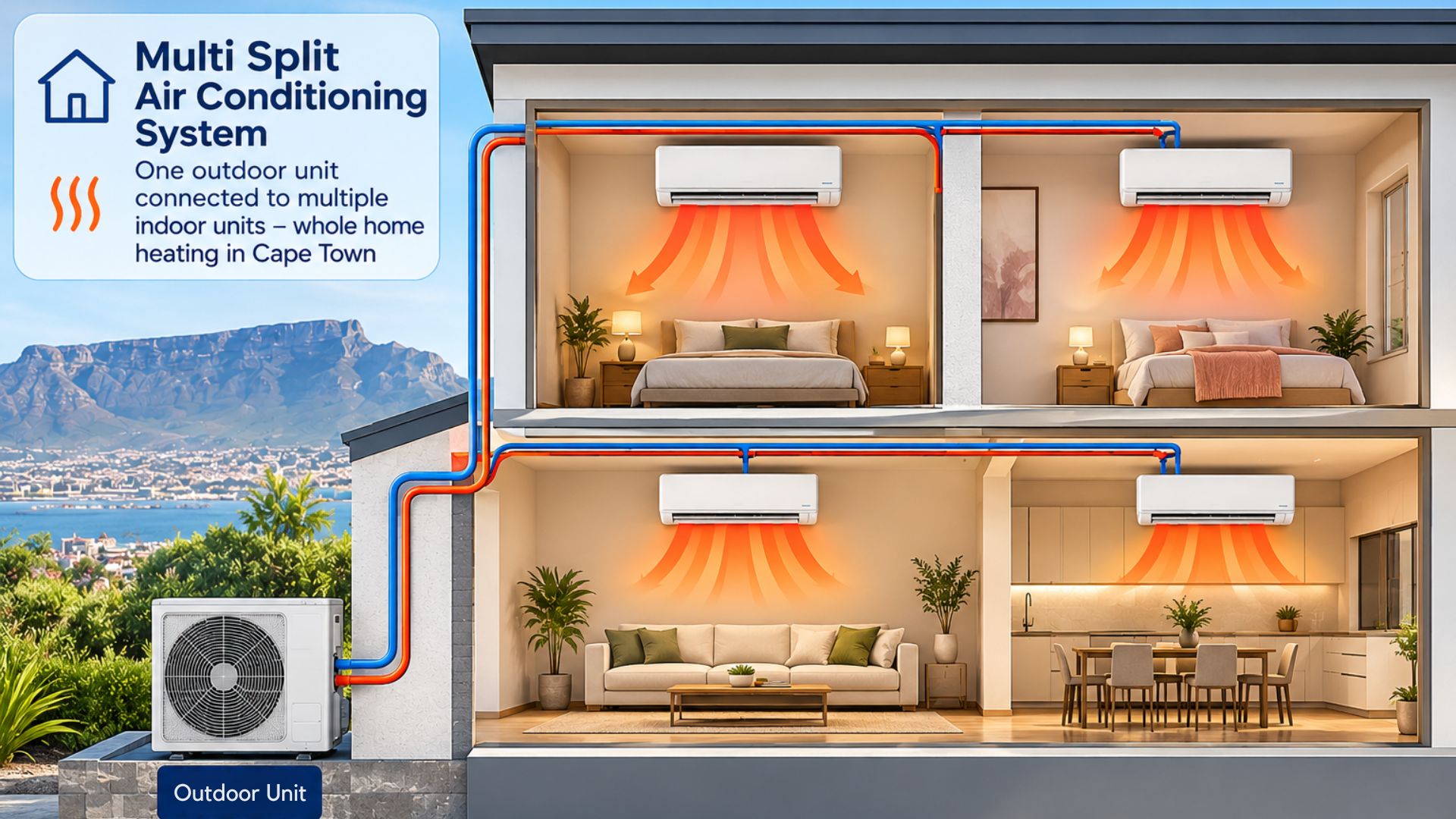
A multi split system connects multiple indoor units to a single outdoor unit. One outdoor unit mounted outside the home supplies refrigerant to two, three, or four indoor units installed in different rooms. Each indoor unit operates independently and can be set to different temperatures. For Cape Town homeowners who want to heat multiple rooms without multiple outdoor units, a multi split system is worth considering. The single outdoor unit reduces the visual impact on the exterior of the property and simplifies the installation footprint. There is one set of refrigerant pipes running from the outdoor unit, which branches to each indoor unit location.
The practical advantage for heating is zone control without multiple outdoor units. The bedroom can run overnight while the lounge runs in the evening, independently of each other, from a single outdoor installation. This suits properties where outdoor unit placement is limited, such as apartments, sectional title homes, or properties with strict aesthetic requirements around external fixtures.
The trade-off is cost at the point of installation. A multi split system costs more upfront than a single split of equivalent capacity. The outdoor unit is larger and more complex, and the installation requires more planning and labour. If one indoor unit or the outdoor unit develops a fault, the entire system is affected rather than just one room. For the right property and the right household, a multi split system is a well considered investment. Cape Climate assesses whether a multi split or multiple single splits is the better approach based on your home layout and heating priorities.
Samsung AR40: Reliable Inverter Heating with Coastal Durability
The Samsung AR40 is a midwall split inverter system available in 9000, 12000, 18000, and 24000 BTU capacities. For Cape Town homeowners, its most relevant feature from a durability standpoint is DuraFin Plus, a protective coating applied to the outdoor coil that resists corrosion from salt air and moisture. In a coastal city where outdoor units face the ocean environment year round, this coating extends the working life of the outdoor unit meaningfully compared to systems without it.
In heating mode, the AR40 uses its Digital Inverter compressor to maintain the target temperature with minimal fluctuation. Good Sleep Mode adjusts the temperature gradually through the night to follow natural sleep patterns, which makes it particularly well suited to bedroom installation where overnight heating is the priority. Auto Restart ensures the system returns to its previous settings after a load shedding cut without any manual input required.
The AR40 sits in the mid range of the market in terms of price. It offers a strong combination of inverter performance, coastal protection, and practical features at a price point that works for most residential budgets. For a family heating a lounge and a bedroom through a Cape Town winter, two AR40 units sized correctly for each room is a practical and cost effective approach.
Daikin Sensira: Quiet Operation with Proven Inverter Performance
The Daikin Sensira is a single split inverter system designed for residential use. Daikin’s reputation in the aircon industry is built on the reliability of its compressor technology, and the Sensira brings that reliability into an accessible residential package.
For heating, the Sensira’s inverter compressor delivers consistent output across the range of Cape Town winter temperatures. The indoor unit runs quietly, which matters in bedrooms and studies where background noise from the aircon can affect sleep or concentration. Daikin units are widely regarded as among the quietest in their class at low fan speeds, which is the speed most used during overnight heating.
The Sensira is available in capacities suited to most residential room sizes and includes a weekly timer function that allows homeowners to programme heating schedules around their household routine. For families who want the bedroom warm before they go to sleep and the lounge warm before they arrive home from work, this scheduling capability removes the need to manually manage the system each day.
Daikin’s service and parts network in South Africa is well established, which means ongoing support and component availability are not concerns over the system’s working life.
Alliance Emerald: Strong Performance at a Competitive Price Point
The Alliance Emerald is a reverse cycle inverter split system that offers solid heating performance at a price point that sits below the Samsung and Daikin ranges. For homeowners working within a tighter budget who still want a proper inverter system with good heating capability, the Alliance Emerald is worth considering.
The Emerald’s inverter compressor handles Cape Town’s winter heating requirements effectively across its capacity range. It includes the standard features expected of a modern residential aircon, including auto restart, sleep mode, and a timer function. Build quality is appropriate for the price point, and Cape Climate’s experience with the Alliance brand in Cape Town’s residential market supports its recommendation for budget-conscious installations.
Where the Alliance Emerald makes the most sense is in secondary rooms, rental properties, or situations where multiple rooms need to be heated and budget constraints make the Samsung or Daikin ranges less accessible across all rooms simultaneously. Installing an Alliance Emerald in a spare bedroom or home office while using a Daikin or Samsung in the main living area is a practical approach that balances performance where it matters most with cost management across the full installation.
How to Match the System to Your Heating Priority
The right aircon heating system for your home depends on which rooms you need to heat, how you use those rooms through winter, and what your budget allows for both the installation and ongoing running costs.
A bedroom that needs overnight heating benefits most from a quiet unit with a reliable sleep mode and auto restart for load shedding recovery. The Samsung AR40 and Daikin Sensira both address these requirements well.
A main lounge or open plan living area needs sufficient capacity to heat the full air volume of the space and distribute warmth evenly across the room. Correct BTU sizing is the critical factor here. A unit that is too small for a large open plan lounge will run constantly without ever making the room genuinely comfortable.
A home office or study that is used during the day needs a system that maintains a consistent working temperature without excessive noise. A 9000 or 12000 BTU unit sized for the room, set to auto mode at around 21 degrees, handles this without drawing significant electricity through the day.
For homeowners heating three or more rooms, the decision between multiple single splits and a multi split system comes down to outdoor unit placement constraints and budget. Cape Climate works through this assessment with every client before recommending a configuration.
The Role of Servicing in Maintaining Heating Performance
A reverse cycle aircon that is not serviced regularly delivers less effective heating over time. Dust accumulates on the indoor coil and filter, restricting airflow and reducing the amount of warm air the unit distributes into the room. The outdoor coil gathers dirt and debris that reduces the efficiency of the refrigerant cycle. Refrigerant levels that drop slightly below optimal reduce heating output without triggering an obvious fault.
In Cape Town’s coastal environment, the outdoor unit is also exposed to salt air that accelerates corrosion on unprotected coil surfaces. An annual service cleans both coils, checks refrigerant levels, inspects electrical connections, and identifies any developing issues before they become faults.
A well-serviced system heating a Cape Town home in winter performs close to its rated capacity year after year. A neglected system loses performance gradually and costs more to run as it works harder to compensate for reduced efficiency. Cape Climate recommends annual servicing for all installed systems, with autumn being the ideal time to service before the winter heating season begins in earnest.
Frequently Asked Questions
Which aircon brand is best for heating in Cape Town?
Samsung, Daikin, and LG all perform well in Cape Town’s winter conditions. The right choice depends on the room size, budget, and specific requirements of each installation. Cape Climate recommends the most suitable brand and model after assessing your space rather than defaulting to one brand for all situations.
How many aircons do I need to heat my home in winter?
This depends on how many rooms you want to condition and whether you want independent control over each space. Most Cape Town families start with the main lounge and master bedroom, which requires two units. Rooms that are used less frequently can be added later.
Is a multi split system better than separate single split systems?
A multi split system suits homes where outdoor unit placement is limited or where a single neat outdoor installation is preferred. Multiple single splits give each room a fully independent system, which means a fault in one room does not affect the others. Cape Climate advises on the right configuration based on your property layout.
What BTU capacity do I need to heat my lounge?
A room of 20 square metres typically suits a 12000 BTU unit. A room of 30 to 35 square metres suits an 18000 BTU unit. Older Cape Town homes with high ceilings and minimal insulation often require a capacity step up from these guidelines. Cape Climate confirms the correct sizing during a site assessment.
How long does an aircon take to heat a room in winter?
A correctly sized system brings a standard room to the target temperature within 15 to 30 minutes from a cold start. Older homes with significant heat loss take longer. Running the system on a timer to begin heating before the room is needed avoids the cold start experience entirely.
Does Cape Climate service the aircons it installs?
Yes. Cape Climate offers annual servicing for all systems it installs. Servicing covers coil cleaning, filter inspection, refrigerant level checks, electrical connection inspection, and a full operational test in both heating and cooling modes.
Get the Right System for Your Home Before Winter Peaks
Cape Town’s coldest months arrive quickly and the demand for aircon installations increases sharply once the first cold fronts hit. Homeowners who book their installation before the peak of winter avoid extended lead times and have their systems running before the coldest weeks arrive.
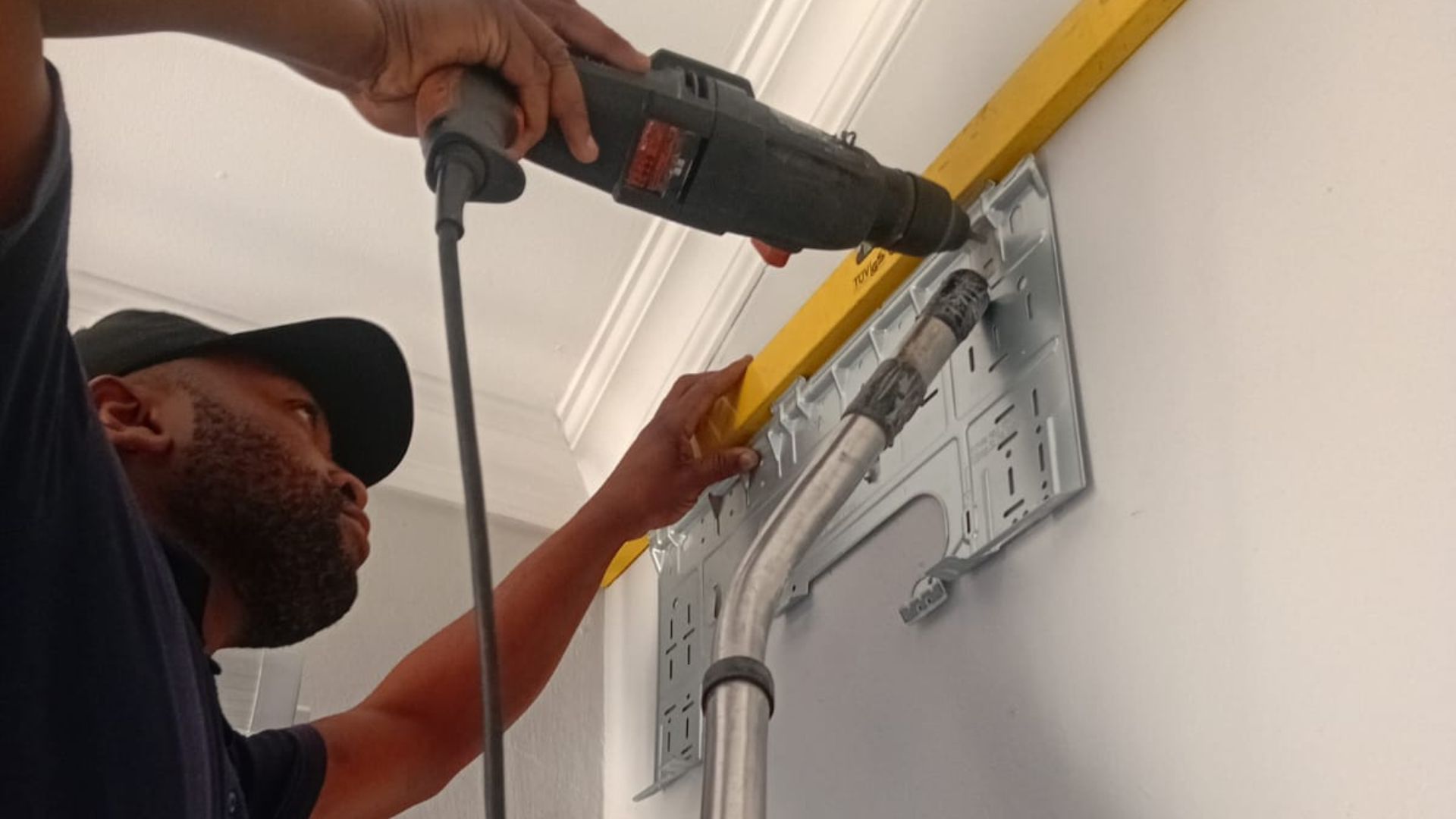
Cape Climate supplies and installs Samsung, Daikin, and LG reverse cycle inverter systems across Cape Town and the surrounding areas. The team assesses your home, recommends the right system and capacity for each room, and manages the full installation from site assessment through to handover. Every installation includes a compliance certificate and a full operational handover so you are confident using the system from day one. Contact Cape Climate to arrange your free site assessment.
Cape Climate is a Cape Town based air conditioning and solar installation company. We supply and install Samsung, Daikin, and LG systems for residential and commercial clients across the Cape Peninsula
